Speaking & Thought Leadership
As a speaker and thought leader, I translate data governance, AI ethics, and platform complexity into clear narratives that help enterprises build systems people can trust and use at scale.
Highlights: Year: 2023 - Present
Focus areas: Data Governance, AI Governance, AI & BI Platforms, AI Ethics, Data Architectures, GenAI Enablement, Responsible AI
Translating platform complexity into enterprise-ready frameworks and narratives
Featured at IBM TechXchange, Six Five Media, Smart Products Show
Media & Industry Conversations
The Six Five Webcast
A conversation on modern data sharing, AI outcomes, and governance at scale.
On the Six Five Webcast, I joined industry analyst Steven Dickens to discuss why data sharing has become the bottleneck and the key to unlocking enterprise AI.
Smart Products Podcast
A discussion about AI product thinking, governance, and stakeholder alignment.
On the Smart Products Podcast, I shared how product leaders can navigate the complexity of AI by grounding decisions in data reality, governance principles, and clear problem framing.
What I Speak About
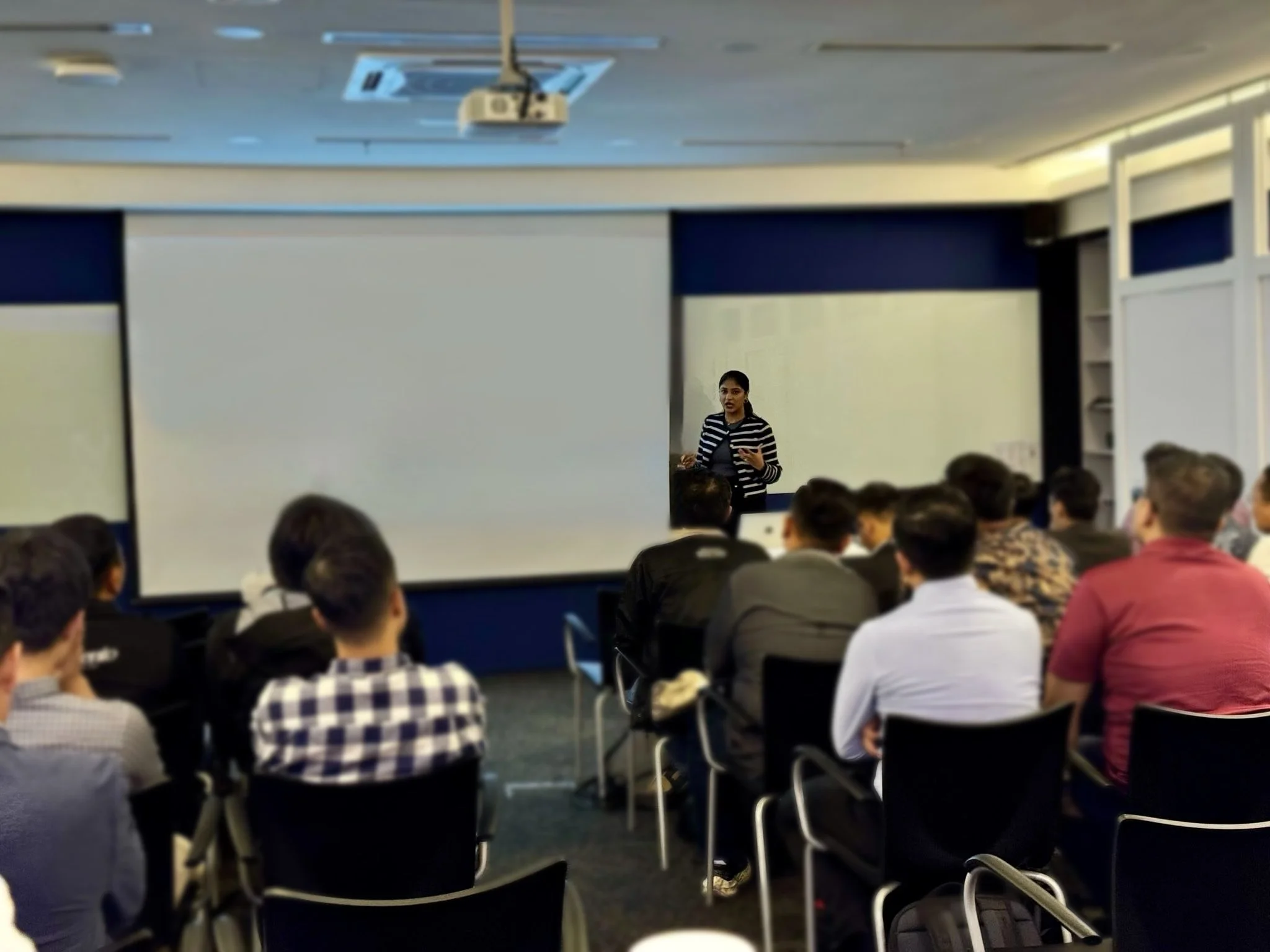
I speak about building data and AI systems people can actually trust and use at scale, where strong product thinking, governance, and real-world adoption meet.
My work is shaped by hands-on experience launching enterprise data platforms and by my ongoing Master’s in AI Ethics & Society at the University of Cambridge, where I study how AI systems can be designed to be transparent, accountable, and aligned with human values. This perspective informs how I talk about data governance, AI readiness, and responsible innovation - not as theory, but as something teams can operationalize today.
Across talks, webinars, and panels, I focus on:
Data governance being the foundation for AI and BI
Governance as a growth and trust accelerator, not a blocker
Responsible AI in practice, from explainability to adoption
Measuring the ROI of AI ethics, drawing on work building business cases across Europe, North America, and Asia
My goal is to help product leaders, engineers, and executives transition from experimentation to trusted, enterprise-scale AI, utilizing clear storytelling, practical frameworks, and lessons learned from real-world customer deployments.
Featured Conference Sessions – IBM TechXchange
IBM TechXchange is IBM’s flagship global technical conference, bringing together developers, architects, product leaders, and enterprise practitioners to explore how modern data, AI, and platform technologies are built and deployed at scale.
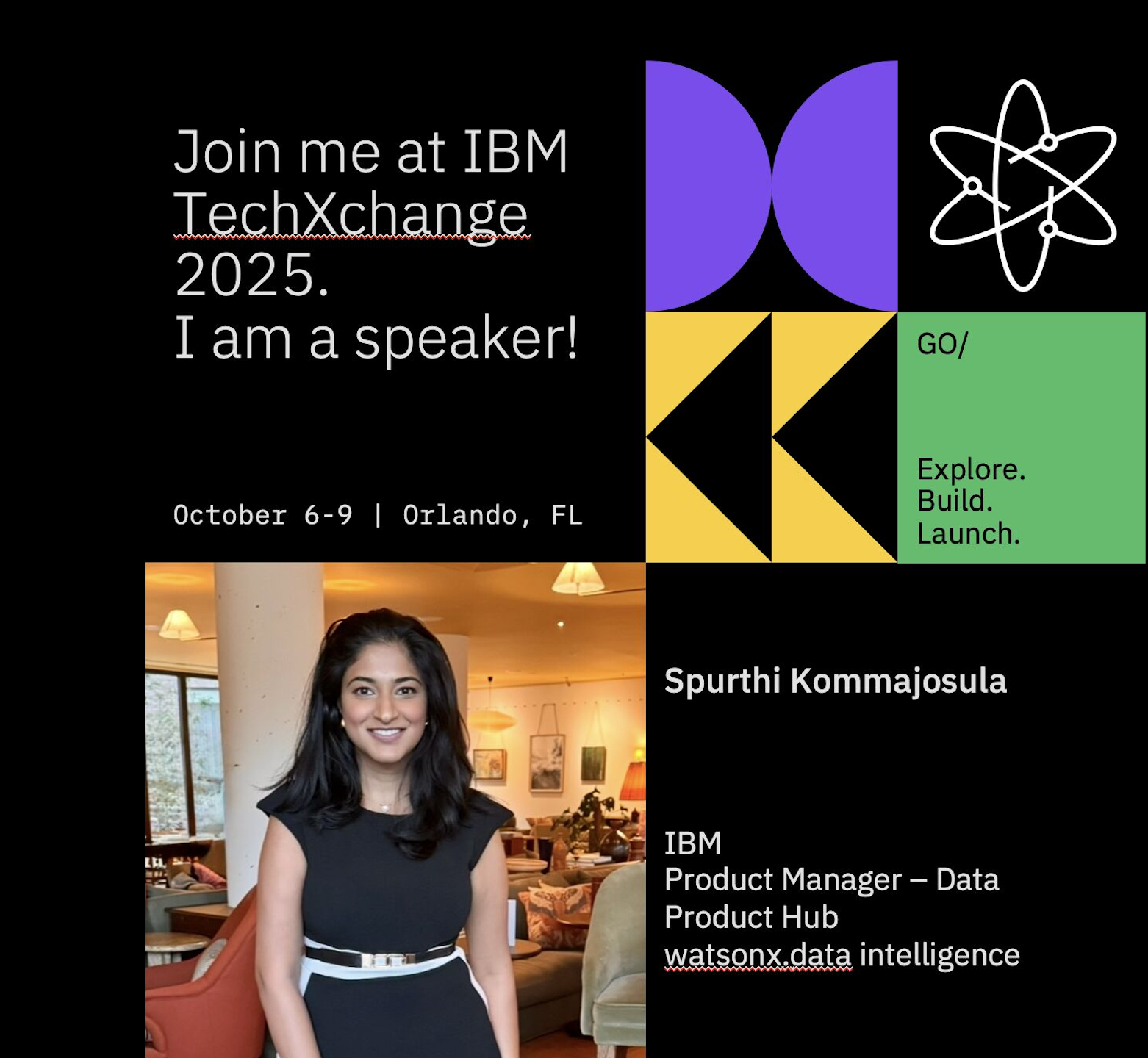
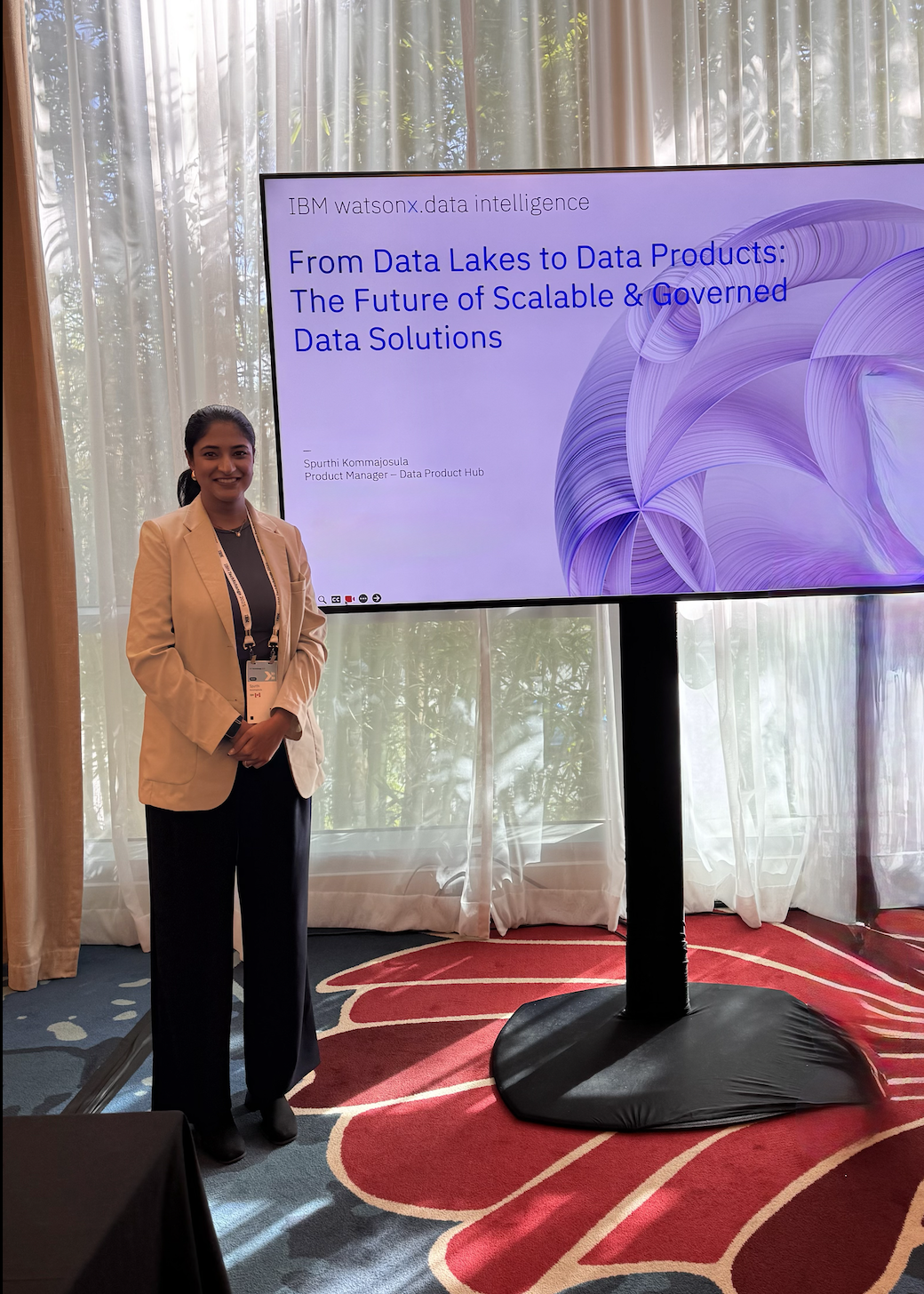
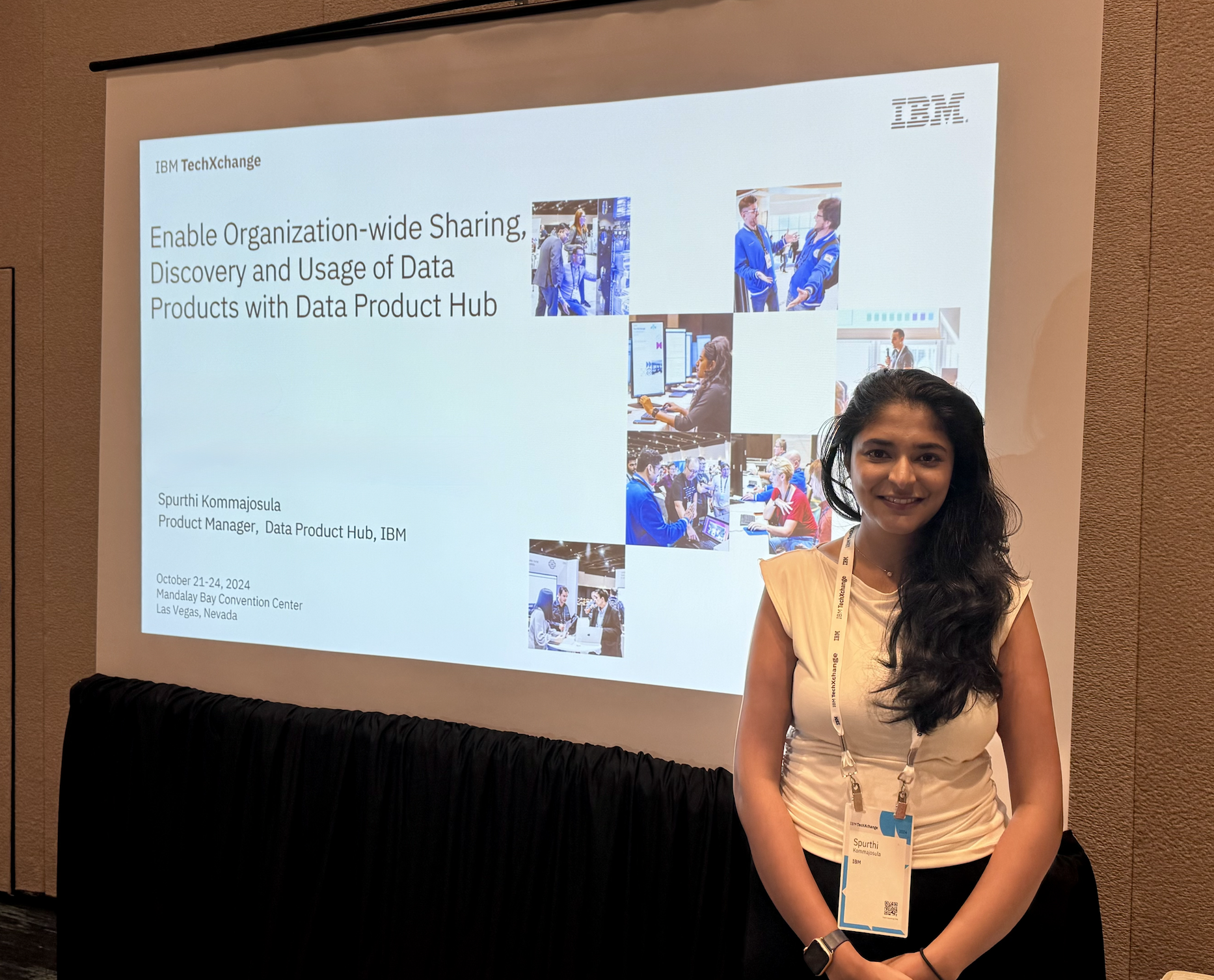
I spoke across breakout sessions and hands-on labs, translating data product and governance concepts into practical frameworks and real-world enterprise use cases.
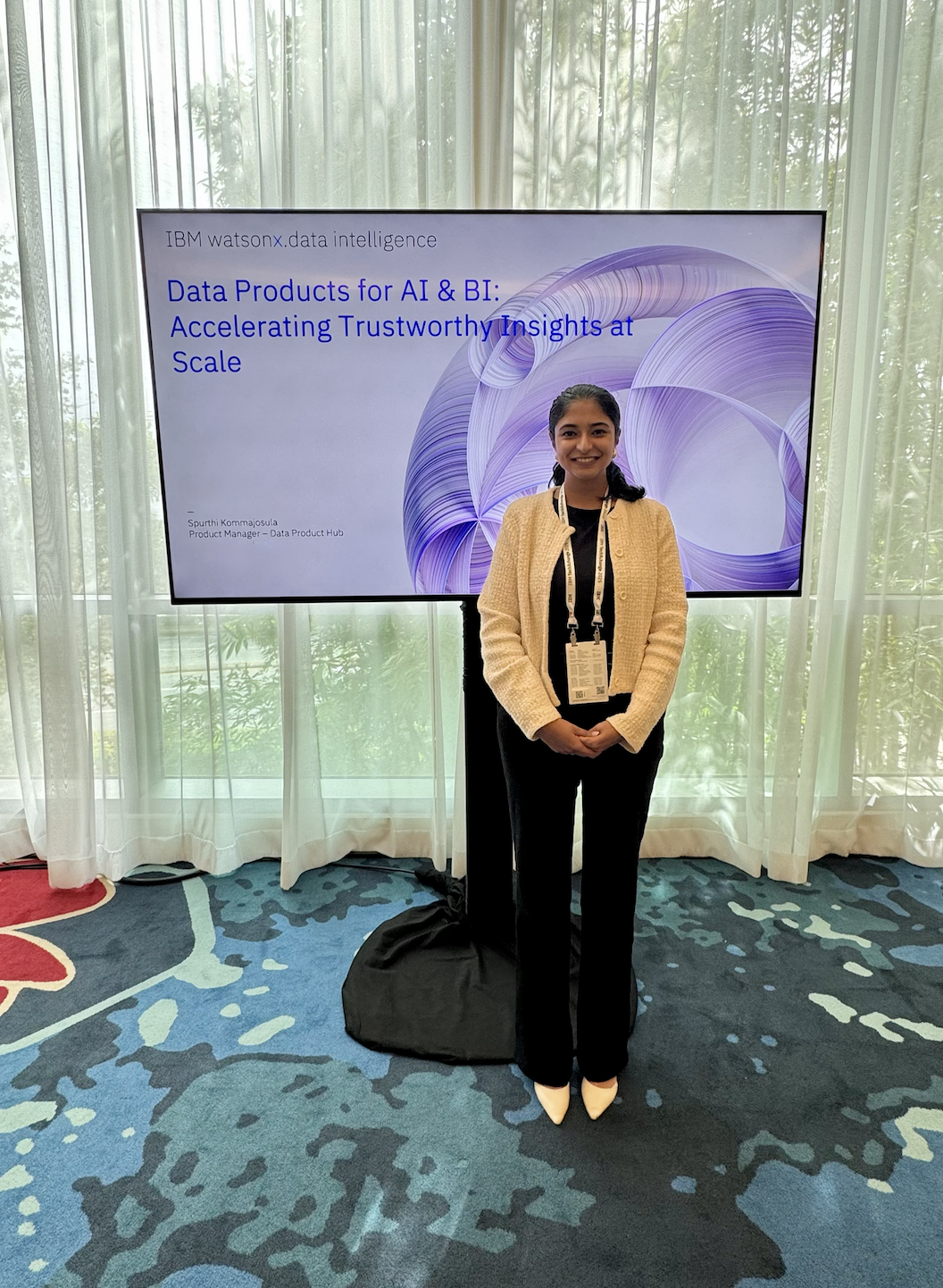
-
Examined why AI and BI initiatives fail without trusted data foundations, and how data products with ownership, quality signals, and context create the conditions for explainable, reusable, and enterprise-ready insights. Positioned governance as a strategic capability that accelerates analytics and AI adoption rather than constraining it.
-
Explored the architectural and organizational shift from centralized data lakes to product-oriented data ecosystems. Discussed how combining lakehouse architectures with data product thinking enables governance at scale, cross-team collaboration, and faster value realization for AI and analytics.
-
Led discussions on how lakehouse architectures and governed data products work together to support AI, BI, and regulatory requirements, focusing on lifecycle governance, metadata-driven trust, and long-term sustainability rather than point solutions.
Webinars & Product Thought Leadership
Effortless Data Access: Rethinking How Humans Interact with Governed Data (Text2SQL)
As data platforms grow more powerful, they often become less accessible to non-technical users. This session explores how natural language interfaces change the relationship between people and governed data, reducing dependency on technical teams while preserving trust, quality, and accountability.
Top 5 Capabilities to Streamline Data Sharing and Accelerate Data-Driven Outcomes
Enterprise data sharing often breaks down not because of a lack of data, but because access is slow, manual, and poorly governed. In this session, I unpack how traditional request-based data access models introduce friction, duplicate effort, and delay value realization for analytics and AI teams.